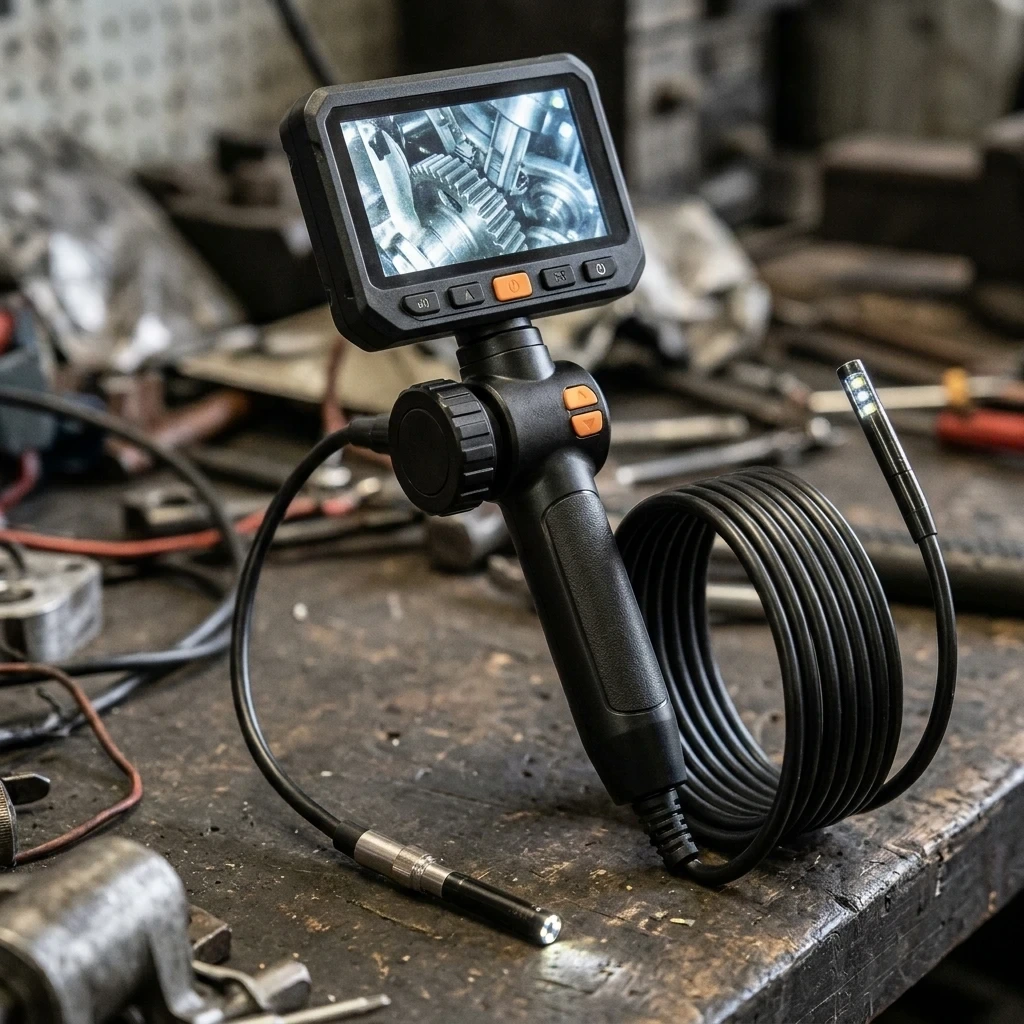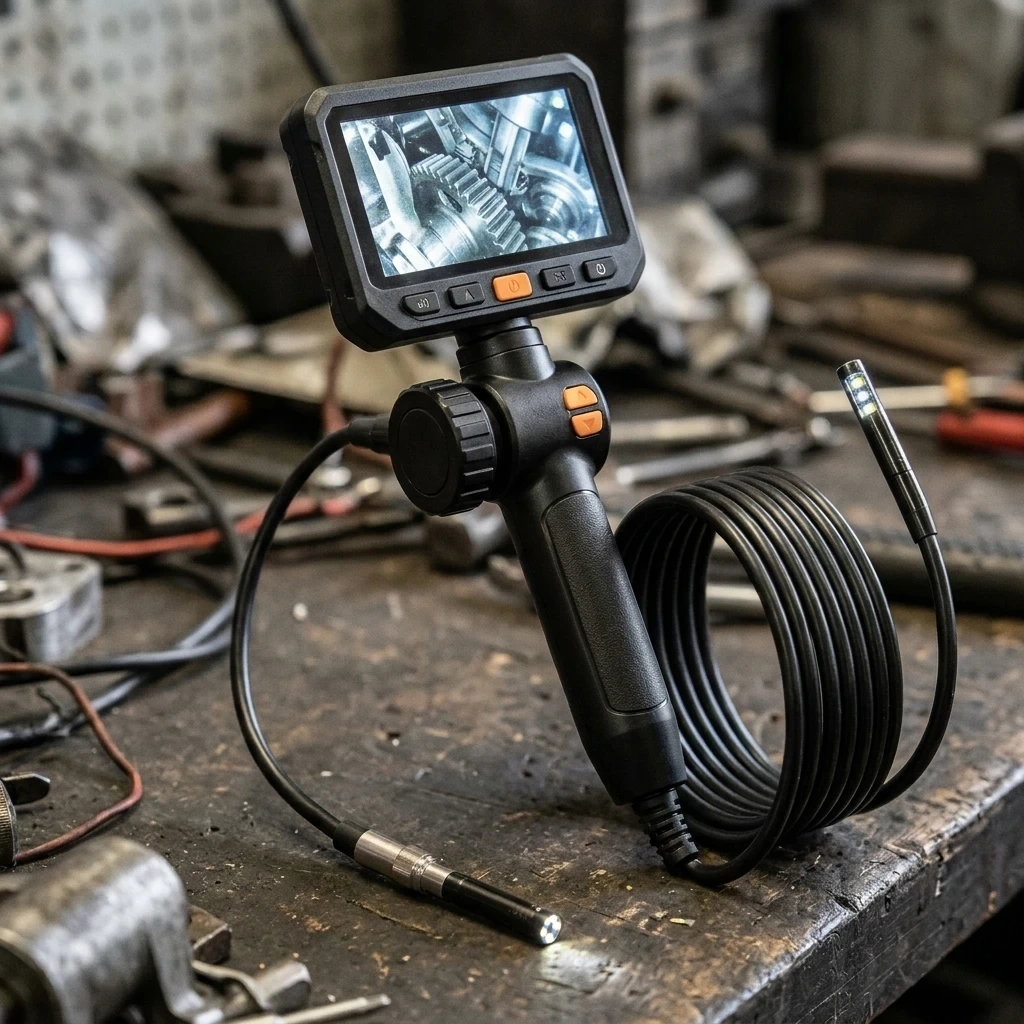
This Acoath borescope two-way articulating borescope review comes down to one question: do you need to steer the camera tip? If you inspect engine bays, wall cavities or pipe bends, the articulating tip is worth paying a little extra for. If you only look straight down open pipes, a fixed-camera scope usually costs less and does the job.
Is the Acoath two-way articulating borescope worth buying?
It is worth buying if your inspection jobs involve turns, offsets or tight spaces where a camera pointing straight ahead sees only a wall. The articulating tip is the whole reason to choose this scope over a cheaper fixed one. Without a use for it, you are paying for a feature you will not touch.
Think of it as a deal question rather than a quality question. A budget articulating scope will not match the build of a professional unit that costs several times as much. What matters is whether the steering gives you views a cheap fixed scope cannot, at a price that still counts as a bargain.
For most home, car and DIY inspection jobs, it can. The sections below cover where it helps, where budget scopes in this class tend to cut corners, and who should skip it.
What do you get in the box and how does it feel in hand?
The Amazon listing is the final word on what is included, so read the contents list there before ordering. Specs and accessory counts on budget electronics change between listings and sellers, and this article does not quote them.
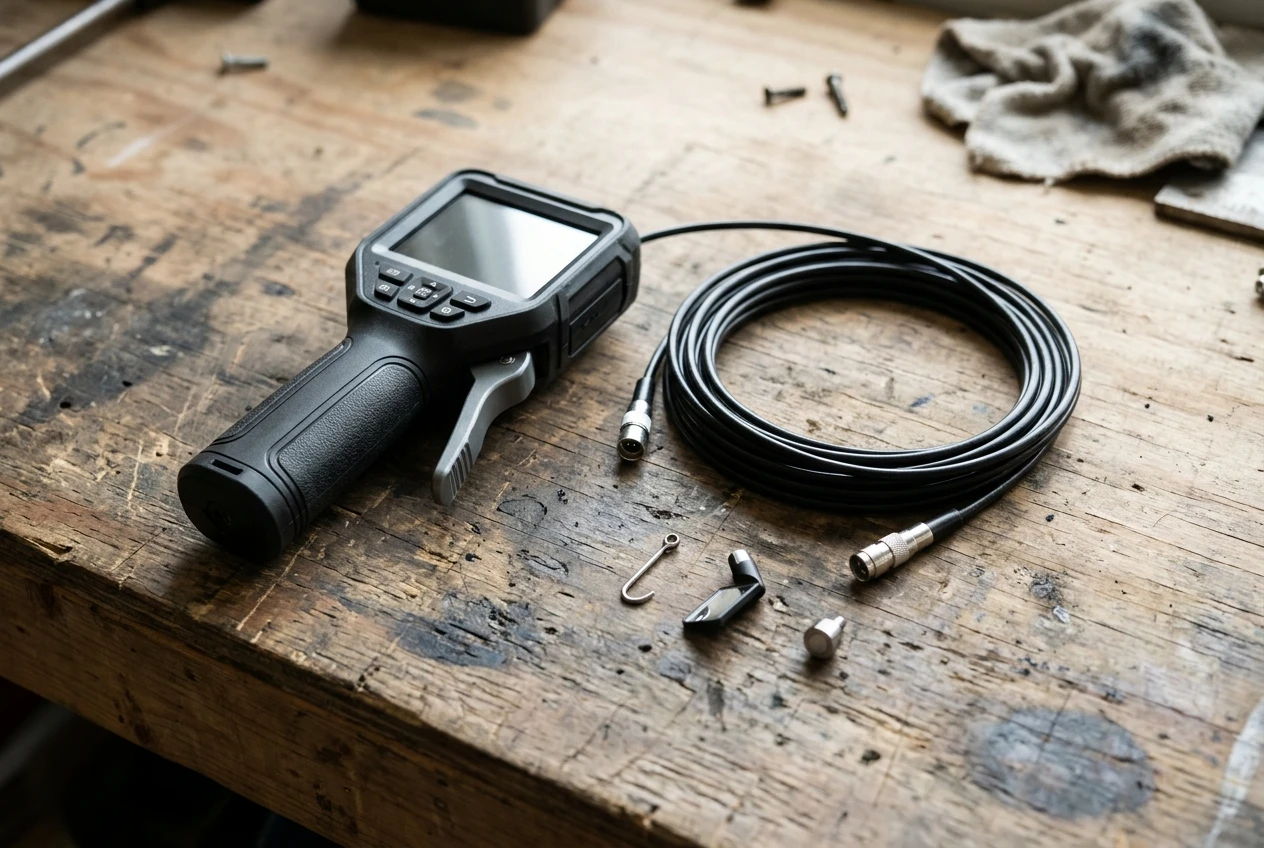
Here is what to confirm on the listing:
- Screen or phone connection: whether the scope has its own display or sends video to your phone, since this changes how you use it in tight spots.
- Cable length and diameter: length decides how deep you can go, and diameter decides what openings it fits through.
- Lighting: whether the tip has adjustable LEDs, because dim lighting ruins an inspection faster than low resolution does.
- Accessories: hooks, magnets or mirror attachments, which are useful for retrieving dropped screws and seeing around obstructions.
- Power: whether it uses a rechargeable battery or a cable, and what it takes to charge it.
How it feels in hand is the one thing a listing cannot tell you. The steering control, usually a lever or dial on the handle, is the part to look for in buyer reviews. Look for comments on whether the lever moves smoothly, whether the tip holds its angle, and how heavy the handle feels after several minutes of use.
What does the two-way articulating tip do better than a fixed-camera scope?
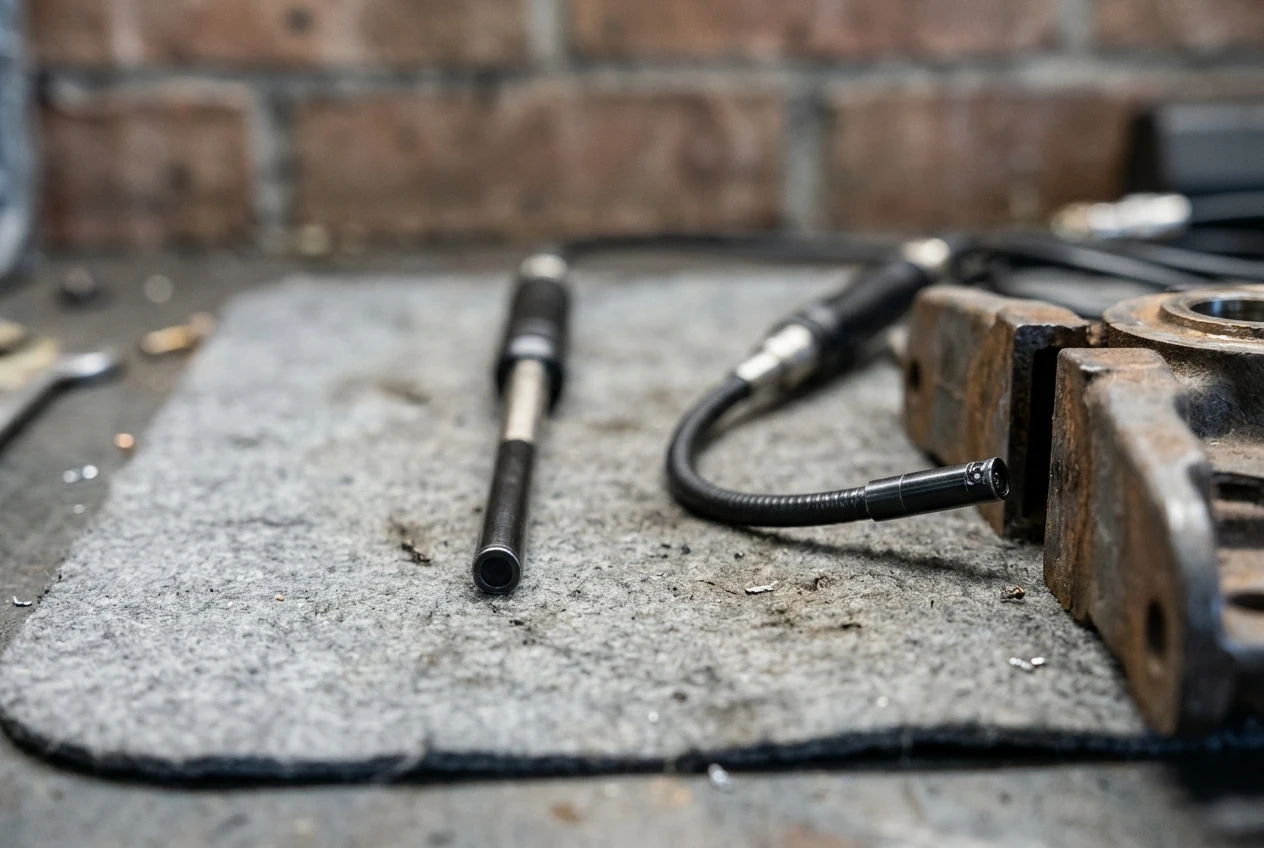
It lets you aim the camera without moving the cable. A fixed-camera scope looks only in the direction the cable points, so you aim it by pushing, twisting and hoping. An articulating tip bends in two directions, typically opposite ones along a single plane, so you can angle the lens up or down (or left or right, depending on how the handle is oriented) while the cable stays put.
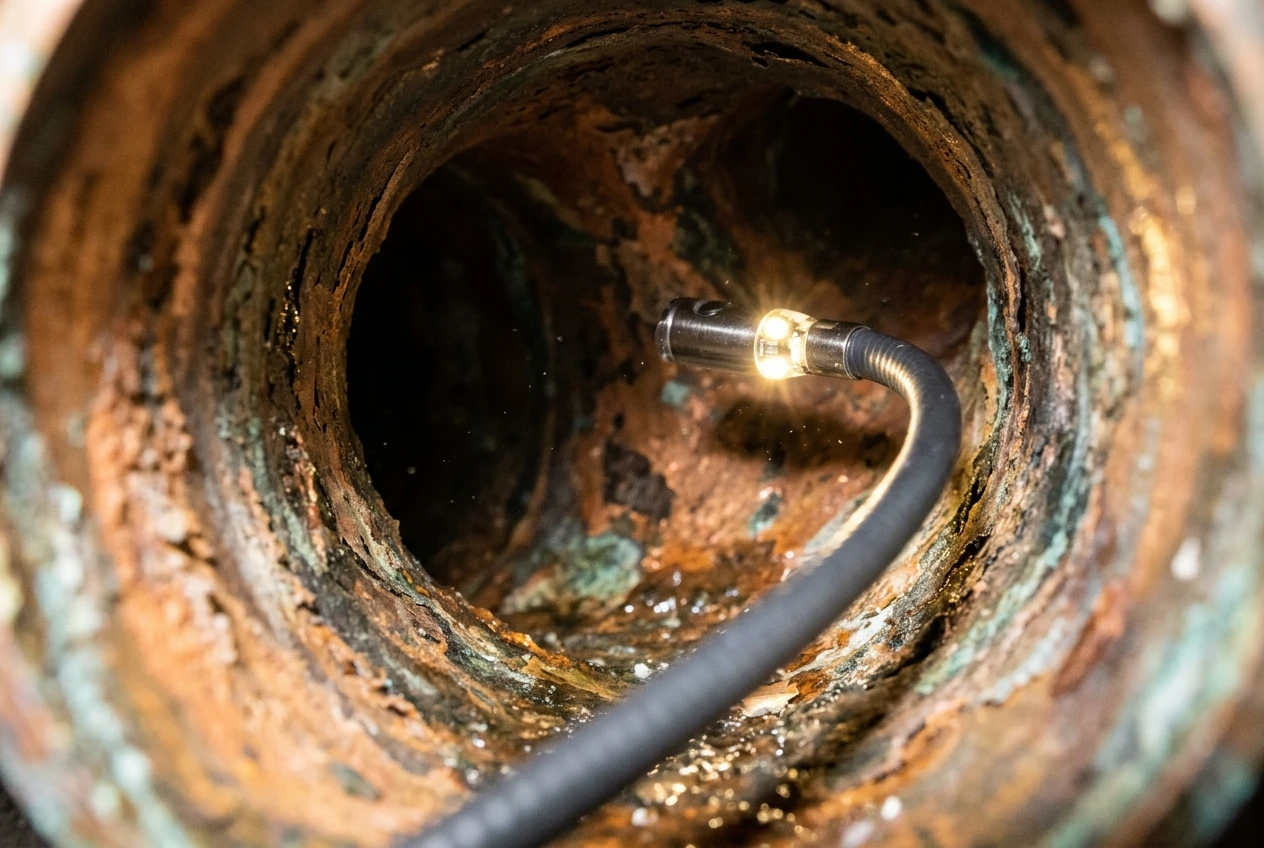
That matters in a few common situations:
- Looking past a bend. Inside a pipe elbow or behind an engine component, a fixed camera pushes against the wall. A bending tip can follow the turn.
- Checking the sides of a space. In a wall cavity or a duct, you can look at the surfaces beside the cable instead of only the end of the run.
- Inspecting a specific spot. Once the tip is where you want it, you can tilt the view to a weld, a fitting or a suspected leak instead of settling for whatever the camera happens to face.
- Retrieving or locating a dropped item. Being able to angle the view helps you find a screw or a washer, instead of guessing.
Two-way steering has limits. It bends along one axis, so you cannot sweep the view in a full circle the way a four-way scope can. Rotating the whole cable fills some of that gap, though it takes patience in tight spaces.
What are the pros of the Acoath borescope?
The main strength is that it gives you a steerable view at budget-shopper money. Most of the advantages come from the articulation itself.
- Better reach around corners. The tip bends, so you see inside offsets and turns that a straight camera misses.
- Less cable wrestling. You adjust the view with the handle instead of pulling the cable back and re-feeding it at a new angle.
- Useful across jobs. One tool can cover a look inside a car engine bay, a drain access point, a wall cavity or the back of an appliance.
- Lower cost than professional steerable scopes. You get the core feature without paying for industrial-grade build.
- A simple control scheme. Two-way articulation has one control axis, so it is easier to learn than a four-way system.
A steerable scope also helps you document what you find. If you can aim at a problem, you can capture a clear photo or clip to show a mechanic, contractor or landlord.
What are the cons to know before you buy?
Budget articulating scopes ask you to accept trade-offs, and it is better to know them before you click. These are the areas where scopes in this price class commonly fall short, so check each against the listing and recent buyer reviews.
- Limited steering range. Budget tips often bend less than their marketing images suggest. Look at what buyers say about how sharp a turn the tip can make.
- Image quality. A small camera sensor in a narrow tip rarely matches the picture from a phone camera. Expect usable detail, not crisp close-ups of hairline cracks.
- Durability of the steering mechanism. Moving parts are where cheap tools wear out first. Reviews that mention the tip loosening or the lever failing over time are worth reading closely.
- Two-way, not four-way. You steer along one axis only, which can be frustrating in complex spaces.
- App or software quirks. If the scope connects to a phone, connection stability and app quality vary a lot in this price range, so look for comments on both.
- Not built for harsh conditions. Check the listing for water resistance claims, and do not assume the cable can handle hot engine parts, chemicals or sharp edges.
None of these rule out a purchase. They simply define what the scope is for: occasional inspection jobs, not daily professional use.
How does it compare to a standard budget borescope?
A standard budget borescope has a fixed camera on a flexible cable, and it usually costs less. The Acoath adds steering, which costs a little more and adds a moving part that can wear. The table shows general tendencies for each type, not measured specs for either product.
Feature Acoath two-way articulating Standard fixed-camera budget scope Aiming the camera Bend the tip with a handle control Push and twist the cable Looking around bends Better, within the tip’s range Often stops at the first corner Viewing side surfaces Possible by angling the tip Difficult Price Usually higher Usually lower Moving parts that can wear Yes, the steering mechanism Fewer Learning curve Slightly higher Very low Best for Offsets, engine bays, cavities Straight pipes and open runs
If most of your checks are straight shots, the fixed scope is the better deal. If you often find yourself saying “I just need to see around that corner,” the steering pays for itself quickly.
Who should buy the Acoath borescope, and who should skip it?
Buy it if your jobs involve tight, awkward or bent spaces and you want a steerable view without spending professional money. It suits several kinds of buyers:
- Home DIYers checking wall cavities, ducts, crawl spaces or behind appliances.
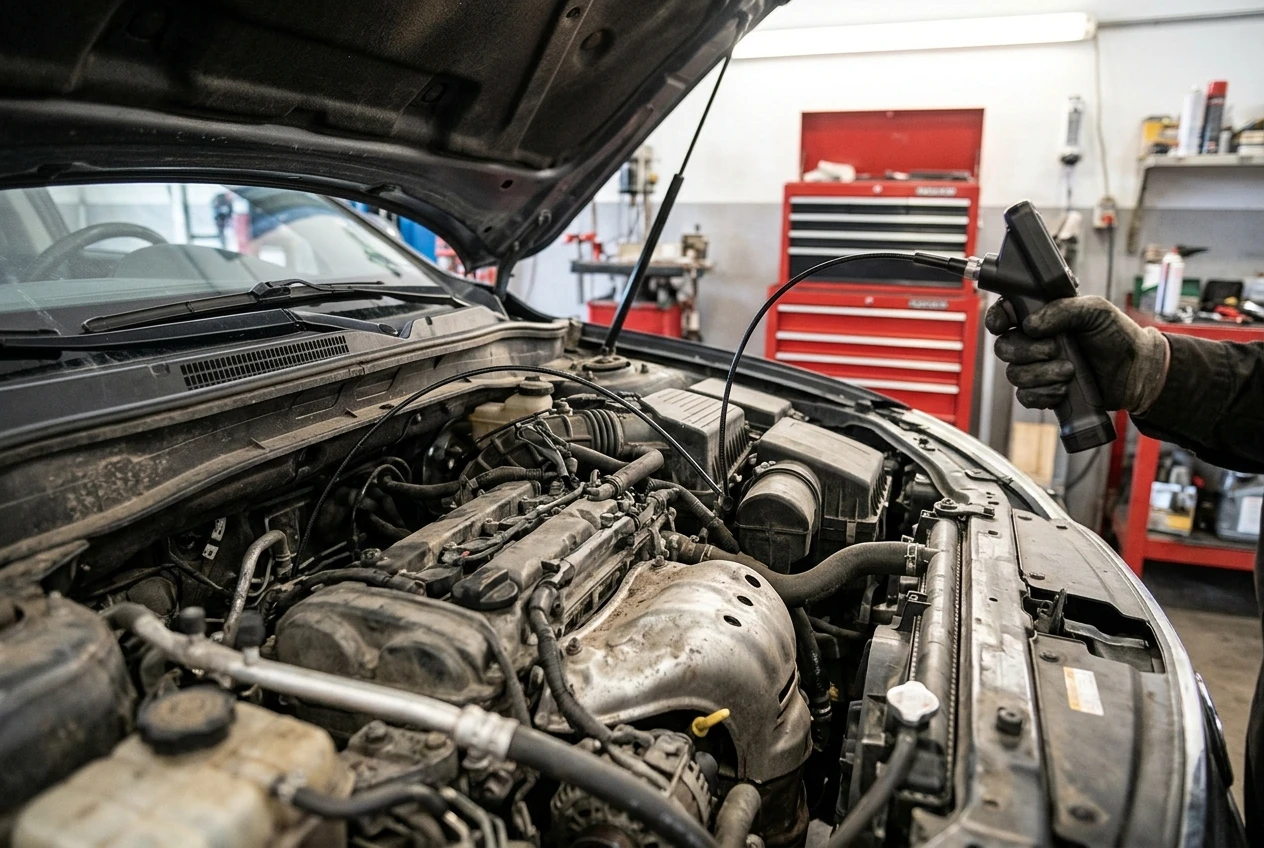
- Car owners peering into engine bays, behind panels or into cylinders where a straight camera cannot be aimed.
- Hobbyists and tinkerers who want one tool for a wide range of occasional inspection jobs.
- Gift shoppers looking for a practical gadget for someone who likes fixing things.
Skip it in these cases:
- You only inspect straight, open runs. A cheaper fixed-camera scope will give you the same view.
- You need professional image quality. Documenting fine cracks or doing paid inspection work calls for a higher-grade scope.
- You need four-way steering. If you work in complex spaces where a one-axis bend is too limiting, look at four-way models.
- You will use it daily in rough conditions. Moving parts in a budget tool will wear faster under heavy use.
Where can you check the current price and reviews?
The Amazon listing shows the current price, the full contents list and the latest buyer feedback. Check it before you decide, since deal prices can shift.
When you read the reviews, sort by most recent and look for repeated comments about the same issue, such as steering that loosens or an app that drops the connection. One complaint is an outlier. The same complaint from several buyers is a pattern. Photos and clips from buyers also show you the real image quality better than the listing’s marketing images do.
Check the current price and recent buyer reviews on the Amazon listing before you decide, since deal prices can shift.